Open source in the Germany Stack, AI agents in permit procedures and, for the first time, a dedicated day on cybersecurity and crisis preparedness: the Smart Country Convention (SCCON) 2026 showed where digital public administration is heading.
Summary: More than 30,000 visitors came to SCCON in Berlin from 13 to 15 October 2026, around 30 percent more than the year before. Five topics took center stage: open source as part of the state’s architecture, AI agents in administrative procedures, clear responsibilities, the reuse of proven solutions, and the resilience of public administration. All five touch on the questions we are working on at Autarq with the sovereign agentic workspace.

Stuttgart, where Autarq is developed, ranks first in the Smart City Index for the first time, Bitkom’s ranking of Germany’s 83 largest cities. First Mayor Dr. Fabian Mayer accepted the award at SCCON and set out the guiding principle: simplify processes first, then digitalize them. We share this principle at Autarq: AI agents only take work off people’s hands once the process behind them is clear and it is settled at which point a person decides. How federal, state and local governments create the conditions for this was the guiding question of many debates at SCCON.
What role does open source play in the Germany Stack?
In his opening speech, Federal Minister for Digital Affairs Dr. Karsten Wildberger called open source an essential part of the Germany Stack. As examples, he named the office software openDesk and the realignment of the Center for Digital Sovereignty (ZenDiS). A new digital center is to coordinate ZenDiS, DigitalService, ITZBund and FITKO so that proven solutions reach regular operation faster.
Autarq runs openDesk wherever an organization’s data should reside: on-premises, with German cloud providers such as IONOS and Hetzner, or as a fully managed service, including migration, updates, monitoring and backups. Extended with AI features, this becomes Autarq Work, our workspace with integrated AI agents.
How do AI agents find their way into administrative procedures?
As a concrete example, Dr. Wildberger presented the AI application SPARK. It is designed to cut processing times for infrastructure permits by more than 80 percent and is already in use in the first federal states. The Agentic AI Hub of the Federal Ministry for Digital Affairs, which brings start-ups and municipalities together, has entered its second round.
According to Dr. Wildberger, AI should support employees in searching for information, editing documents and preparing responses, so that more time remains for cases in which people have to decide. Following this principle, Autarq is developing an agentic component as a contributor to F13, the open-source AI assistant of the State of Baden-Württemberg. It breaks a case down into individual steps, logs each of them and obtains approval at defined points, while the decision on the matter remains with the caseworkers.
Why were responsibilities and rules the focus?
In its review, the trade magazine eGovernment notes that the stages were less about new technology than about responsibilities, rules and resources. Dr. Wildberger also acknowledged that the digitalization of public administration is progressing too slowly and that many services are hard to find or poorly connected.
For AI in everyday work, this means that roles, access rights and traceability are settled before the first agent is deployed. Autarq Chat comes with rights management for this, and Autarq Work with openDesk’s central user administration and role management. Single sign-on and admin controls complement this.

How do proven solutions reach the wider public sector?
At SCCON, KGSt and the University of Bremen presented first results of the Municipal Digital Index (KDIX). Four out of five district administrators and mayors surveyed favor centrally developed IT procedures, and three quarters would like to see uniform nationwide standards. Wildberger made a similar appeal to federal states and municipalities to adopt proven digital administrative services.
F13 shows how this can work: the AI assistant was developed in Baden-Württemberg for public administration and has been open source since July 2025, so that federal, state and local governments can use and develop it together. Autarq sets up F13 in public authorities and municipalities, connects existing systems and internal documents, and takes over ongoing operation. For federal states, Autarq is designed as a sovereign standard that can be rolled out across subordinate authorities and municipalities.
Why was there a Resilience Day for the first time?
On 15 October, SCCON dedicated an entire day to the resilience of business and public administration. Representatives of the Federal Criminal Police Office, the Federal Agency for Technical Relief, the Federal Office for Migration and Refugees, the German Armed Forces and the German County Association discussed resilience, sovereignty and cybersecurity.
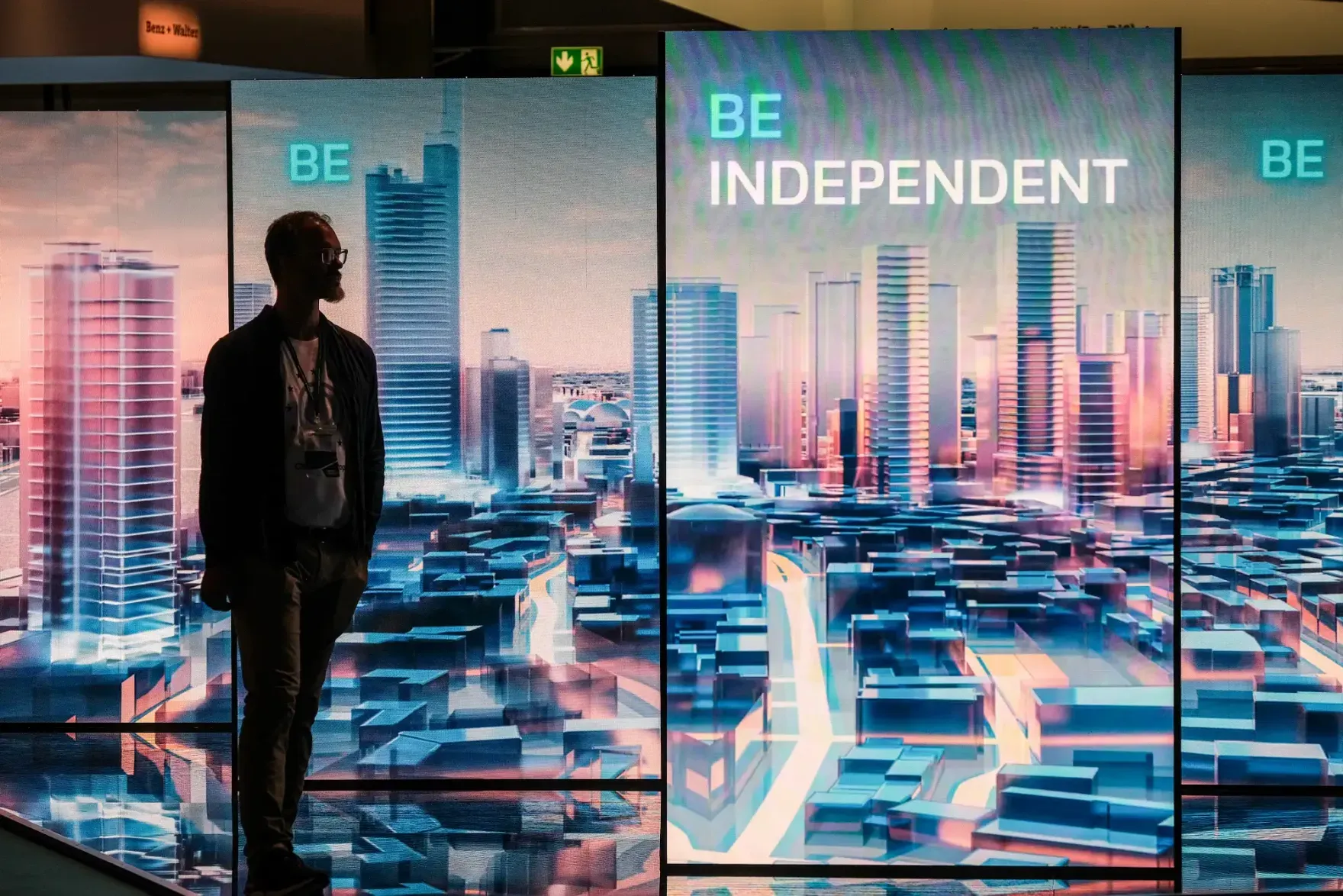
Among other reasons, the organizers justify the Resilience Day with technological dependencies that make the economy and society more vulnerable: organizations need to know their dependencies and remain able to act in a crisis. For digital workplaces, this starts with the question of where data resides and who controls operations. Autarq hosts in Germany or in EU data centers with clear data residency, and for municipalities and public authorities, operation is designed for NIS2 and the GDPR.
What does Autarq offer public administration?
The topics of SCCON 2026 match what we are working on in Stuttgart: AI agents that take work off caseworkers’ hands, built on open software and sovereign infrastructure. Autarq offers three ways to get started.
Autarq Chat connects AI models and agents to existing systems via connectors and can be introduced quickly. Autarq Work is the complete workspace based on openDesk and EuroOffice, with the same AI deeply integrated into files, projects and communication. For F13, we additionally support model selection and set up monitoring, including when it runs on your own infrastructure.
Frequently asked questions
When and where did the Smart Country Convention 2026 take place?
From 13 to 15 October 2026 at the Berlin exhibition grounds. It is organized by the digital association Bitkom and Messe Berlin, and Portugal was the partner country. More than 650 exhibitors presented their solutions across 27,000 square meters.
When is the next Smart Country Convention?
From 5 to 7 October 2027, again at the Berlin exhibition grounds.
What does the Smart City Index measure?
The digital association Bitkom uses it to assess the level of digitalization of all 83 German cities with more than 100,000 inhabitants every year. For 2026, 14,442 data points were collected across five categories: administration, IT and communication, energy and environment, mobility, and society and education.
What is Marketplace D?
A nationwide platform for public procurement that the Federal Ministry for Digital Affairs launched at SCCON. Companies register with their profile, procurement offices publish their requirements, and an AI agent matches the two and documents the process. It starts with smaller contracts that do not require a formal tender procedure.
Autarq is the brand of MWAY DIGITAL GmbH from Stuttgart and builds the sovereign managed cloud platform for Europe. Autarq Work is our sovereign agentic workspace based on openDesk CE, augmented with Autarq Chat, Nubus IAM, and Autarq Network, optionally extensible with add-ons such as Relution for MDM/UEM. All components run in German data centers, with AGPLv3-compliant stack composition and full tenant isolation at the Kubernetes level.
Trademark notice: The Smart Country Convention is an event of Bitkom and Messe Berlin. openDesk is an offering of the Center for Digital Sovereignty (ZenDiS). F13 is an application of the State of Baden-Württemberg. All other product and project names mentioned are trademarks or designations of their respective owners and are used here solely for identification purposes.